
Isolation Drills
On Homesteading & Surrogate Activities

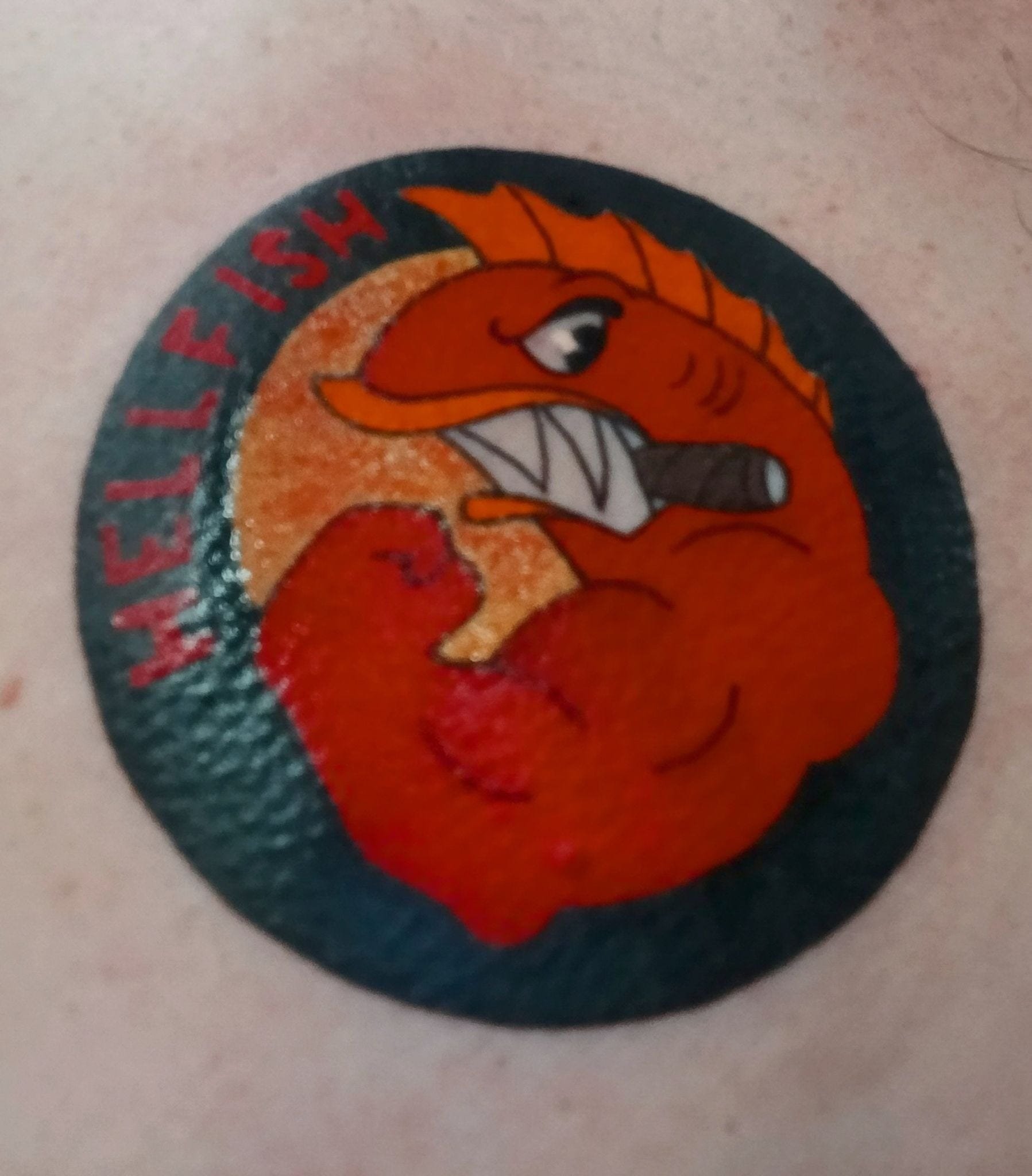
I turned 40 last week and celebrated by getting a Simpsons tattoo I’ve wanted for years:
I’m still hacking away at Burning Redd and just topped 90k words this week. A typical crime thriller has a length of 80,000-100,000, which means I’m getting pretty close. I’ve been editing and re-writing as I go. I initially thought I would keep the writing as wry and clipped as possible - James Ellroy, Richard Stark - but after going over each chapter at least five times, it just ends up sounding like me.
A friend of mine recently sold his house in the city and bought a large piece of property up north. He plans to build an off-the-grid cabin with a solid foundation and a few other outbuildings using timber sourced from his own acreage.
He’s talked about pulling up stakes and moving up north for years. I could never tell if he meant it or if he was just daydreaming out loud a la George and Lenny in Of Mice and Men (“One day we’ll have a farm with chickens and pigs and rabbits and we’ll live off the fat of the land”). He says he’s serious though.
He also asked me to come. Not to stay up there forever, but to join him for four or five months next spring to help cut down trees, level out the ground, dig a well, pour a few foundations, and…live off the fat of the land, I suppose.
When he first asked, I initially thought it sounded a bit too much like that line in Larry Miller’s classic stand-up routine, The 5 Levels of Drinking: “Hey fellas! If we all bought our own bar, we could live together forever!” It sounded like one of those drunken things you say to a friend sometimes. Only he wasn’t drunk and neither was I.
I told him I’d think about it.
I: Isolation Drills
I went to the movies a few nights ago with my friend C and a few friends of hers. Before the movie began, there was an introduction featuring the two stars. The way they were saying stuff like “we hope you enjoy the conclusion of our tale!” made me realize something rather crucial.
“Wait a minute,” I whispered to my friend. “Is this a sequel?”
“Yep!” she whispered back happily. “It’s also a two hour and forty minute musical. You’re gonna hate it!”
I laughed harder at that than anything I saw in the movie, which I slept through. I’m not mad at my friend or anything. If you know my sense of humor, I think it’s hilarious that I agreed to go to see a 2hr40m musical featuring Ariana Grande that was itself a sequel to an earlier musical film I hadn’t seen. I was totally oblivious to the fact that Wicked is ostensibly a cultural phenomenon. Cultural phenomenons ain’t what they used to be. Nowadays somebody can be “famous” and you have no idea who they are. It wasn’t like that back in the glorious 1990s, was it?
After the movie, one of C’s friends struck up a friendly conversation with me. He asked how C and I met. And I proceeded to spit, stammer, and stutter my way through an interminable answer. I don’t know what the hell happened but, all of a sudden, I couldn’t fucking speak. I mean, I couldn’t string a sentence together.
“So, how did you and C meet?”
“Buh? I uh…met C at um…well….a while ago I think it was? Because we worked together at…2016? And then the pandemic, of course. We don’t work together anymore so uh…yeah um…?”
Determined to finish my sentence, I resolutely pressed on.
“...cuz we…yeah back in 2016…we met together and worked…”
The dude was friendly enough about the whole thing. At first he smiled encouragingly, as if to let me know he wasn’t judging my reply for diction or anything. No pressure, bud. You’ll get there when you get there. One word at a time.
But as the moment stretched on and on, he grew visibly alarmed. At that point, I no longer cared about his question. I was going to finish that damn sentence. I was trying to prove something to myself, no matter the cost, like those affluent CEOs who try to climb Everest and end up dying on the mountain. Finally, he let me off the hook. “Dude, it’s okay. It’s all good. Don’t worry about it.”
So what the hell happened?
Welp, I haven’t been socializing much lately. Like for a few years now. And extended periods of isolation can make people feel rusty or awkward in social interactions.
I don’t say this because I’m setting up a cheeseball, hearthside conclusion about embracing one’s fellow man but to segue into the body of this post.
II: My Solitary Subconscious
I think my subconscious has been trying to tell me something. Without even being aware of it, most of the books I’ve been reading and videos I’ve been watching this year have to do with isolation, independence, and solitary living. In addition to Michael Finkel’s book about the North Pond Hermit, which I wrote about last time, some other books I’ve read recently include:
This book uses a frame narrative about a father searching for his missing son to explore the larger phenomenon of missing persons in America’s National Parks and forests.1
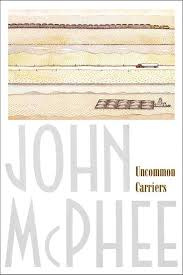
John McPhee’s Uncommon Carriers profiles truck drivers and cargo ship captains, often portraying them as singular hero types, toiling against hardship, loneliness, and self-doubt. To borrow a line from Burning Redd, “lone figures drifting through geological immensities.” The first chapter, which profiles a tanker truck driver as he crosses and re-crosses the Southwestern United States, is the book’s very best.
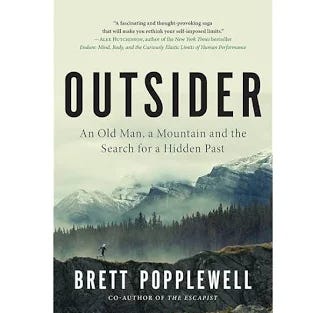
The story of an 81-year-old man named Dag Abaye who lives alone and off-the-grid in a school bus in the woods near Vernon, British Columbia. Dag also runs ultra-marathons and the book follows him as he fails, for the first time, to make the checkpoint cutoff. Disqualified from continuing the race, Dag has to come to terms with the fact that his body will no longer let him do what he wants to do. It’s poignant stuff.
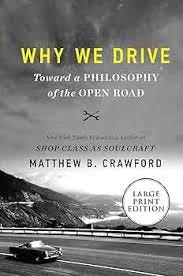
A book-length celebration of driving that pointedly asks the question tech CEOs, A.I. advocates, and proponents of driverless cars seem determined to ignore: Seeing as driving is one of the last bastions in our culture where we have agency, do we really want to give it up to technocratic control?
In addition to the above books, I’ve also recently begun watching a YouTube channel called Wild Homestead about a guy building a cabin and other stuff on a wooded acreage just outside Sudbury. He posts a new video every Saturday morning. The comments section is full of people, mostly younger men, who all say they want to escape contemporary society and regain a sense of control over their lives.
III: Surrogate Activities
I think the recent intense interest in homesteading channels on YouTube, Instagram, and TikTok is an example of what Theodore Kaczynski called a “surrogate activity.” A few years ago I read the Unabomber Manifesto (isolation and solitary living again!), not because I support mailing bombs to people, but because Kaczynski actually had some good ideas.
He believed that the industrial revolution has trapped us in a regimented society that is at odds with our human nature and that we are confined inside systems (capitalism, western civilization) whose chief concern is their own propagation, at the expense of human happiness. Our inability to dictate the terms of our own fate leads to widespread discontent which manifests itself in many different, ultimately harmful ways, one of which is the mass adoption of surrogate activities.
Kaczynski defines “surrogate activities” as artificial goals people pursue in modern society - hobbies, sports, activism, science - because industrial-technological life prevents us from satisfying our innate human need for autonomy, challenge, and meaningful effort. Being unable to participate meaningfully in shaping our own lives (which he calls the “power process”), leads to feelings of powerlessness, frustration, and despair.
Joy is the feeling of one’s powers increasing.
Nietzsche
Surrogate activities take up just enough time and effort to prevent people from acting out in ways that destabilize society (domestic violence, mass shootings, road rage). They don’t satisfy us but they distract us enough to keep us producing inside the system.
Sports are another example of a surrogate activity. We evolved under conditions where our survival depended on territory, status, coalition-building, and physical risk. Conflict had clear and measurable stakes: food, safety, reproduction. Victory and defeat were immediate and consequential.
Modern society removes us from these conditions. In response, culture supplies symbolic substitutes that preserve the form of conflict while stripping away its consequences. Sports function as a ritualized simulation of the type of intergroup violence we used to experience. Two sides compete over symbolic territory, there are clear rules that regulate aggression, and tribal identification is encouraged. This allows spectators to participate emotionally in conflict (risk, dominance, humiliation, triumph) without bodily danger or moral responsibility.
Similarly, watching some capable dude we don’t know cut down timber on his own land which he then uses to build a cabin, gives us vicarious satisfaction, satisfying our need for a sense of accomplishment without having to escape society ourselves or take the financial risk of buying property in a remote rural area. We get to share in the homesteader’s sense of accomplishment, even if it’s only a sliver of his actual authentic experience.
Most viewers of this stuff are savvy enough to know that the guy they are watching is a surrogate for their own desire to stake a claim on territory and achieve a goal through ingenuity and competence, but watching these videos helps to assuage their angst over living in such a shitty society while also reinforcing the worldview that modern life is something to reject. Media theorists believe that pornography serves the same function, especially now that isolation is such a major part of people’s lives given the decline of third spaces (anywhere that isn’t home or work, in locations designed for socialization). Movies perform the same function: they give us dramatic stakes without the risk. Because we so rarely participate in activities that have a visible or measurable effect on our own lives, most of the things we do in modern society are surrogate activities.
It is no measure of health to be well-adjusted to a profoundly sick society.
Jiddu Krishnamurti
The only sane response to a society like ours is to opt out. Some people’s rejection takes the form of physical escape: buying land and building an off-the-grid cabin, while the rest of us must content ourselves with a milder form of rejection. A spiritual, mental, or emotional rejection of the prevailing conditions.
IV: You Will Own Nothing and Be Happy
Even without taking into account Elon Musk and President Trump’s political bromance earlier this year, it’s no secret that Big Tech is working towards a merger with federal/provincial/state governments. Governments already rely on tech infrastructure for public services, national security, and data management while private tech giants like Microsoft, Amazon, Apple and Google depend on massive government contracts and incentives.
As government and tech corporations draw ever closer, the surveillance state grows stronger. Mass surveillance is not an unintentional byproduct of technological infrastructure. It’s a feature of it. And surveillance compels compliance.
I don’t mean to say I’ve suddenly become desperately unhappy. 2025 has still been the best year of my adult life. I’m only trying to make a larger point about not wanting to live in a world where every single mobile phone can be tracked and listened to, ubiquitous CCTV cameras are equipped with facial recognition, and heat seeking drones patrol the sky like metal seagulls.
Given such desolate prospects, it’s no wonder so many people are fantasizing about escape, or watching YouTube homesteaders, or caring way too much about football. Society resembles 1984 more every day, and never more so than with Amazon’s “Wish Fulfillment Centers,” an Orweillian name for a warehouse if there ever was one.
We can’t blame people for seemingly fetishizing property ownership given how few people own their own place anymore. Faced with the direction the world is going in, it’s only natural to want to find a place of one’s own. To name it, fortify it, personalize it, and defend it in isolation, even if that isolation comes with a cost, like no longer being able to converse with a fellow adult or speak a complete sentence anymore.
It’s a trade-off I think I might be willing to make.
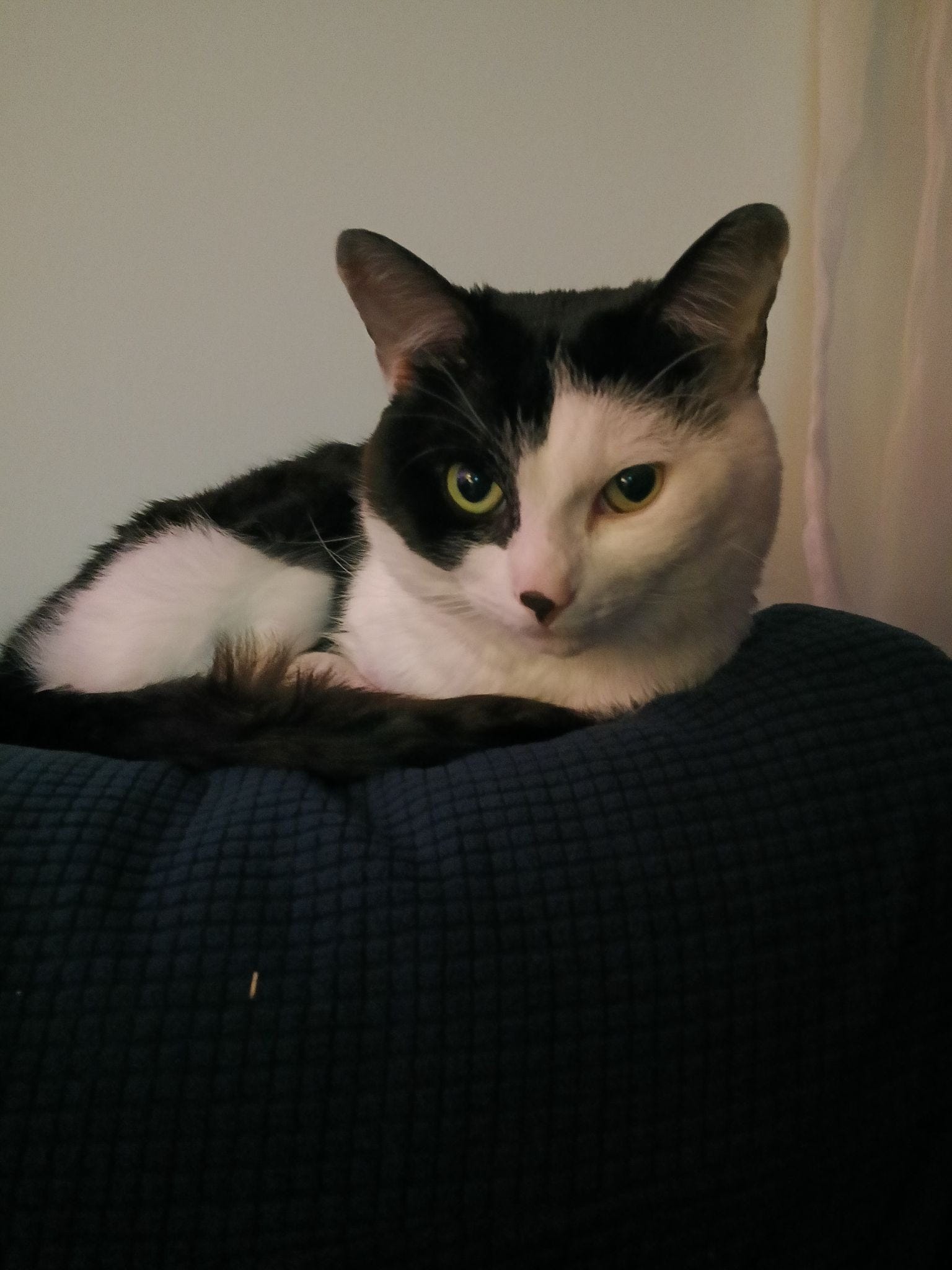
(Of course, only if I can bring Cookie with me.)
There’s a chapter on Troy James Knapp, a.k.a. “The Mountain Man,” who started out robbing cabins and living off the land in Utah, similar to what Christopher Thomas Knight did in Maine. Knapp’s crimes, however, escalated fast. He started stealing guns. He shot up one of the cabins he burglarized. He defecated in a cooking pan he left on some poor guy’s kitchen floor. Knight broke into cabins and stockpiled food in order to hibernate away from society. Knapp broke into cabins for the thrill of trespass and when a manhunt ensued, he started acting out even more. He was nearly killed in an armed standoff with law enforcement when he was finally arrested in April 2013.
Happy belated Birthday! Great writing! I enjoyed this entry the most!
The surrogate activies portion was interesting. Also I started reading your book! 😊
-claud
Love you! Great post